Monday, 15 October 2012

Archives // Deto & Gleam

Progressive Minimal Techno

That's what you could call the music of Hungarian duo Deto & Gleam (aka Peter Takács and Mark Bókay) on their first full album Archives - released early December 2010 by German label Digital Diamonds.

 It was released in three formats via Ektoplazm.

MP3 Download
FLAC Download
WAV Download

01 Chrono
02 511 keV (Album Load)
03 Chrono (Wasted Time Mix)
04 T-Echoes
05 Surgery
06 Tangenter
07 Tears Deconstructed
08 Observation Center

Links

Digital Diamonds
Ektoplazm
Creative Commons
MySpace

Wednesday, 10 October 2012

Checksum

Hello,

for quite some time I have been silent about computing affairs but now that I'm trying to prepare my switch to any Linux distribution there will be a few articles coming up…

But right now a simple tool you might need and for now only for Windows.

If you download open source packages — whether it's the code or some binaries — a good idea is to check the checksum hash.

Most websites use either the MD5 or SHA-1 algorithms, or both.

A fast way to hash your download and check it against the provided checksum without the full installation process is to use some protable checksum hash application.

I found DP Hash to be perfectly sufficient. It's freeware by Dirk Pähl. Nothing fancy, just some simple interface. It allows hashing of only one file at the time and can not export its results except copying the hash to the clipboard.

To check a download it's largely enough…

Website

Saturday, 29 September 2012

Inside the Medieval Mind

Robert John Bartlett is a medievalist currently holding the position of Wardlaw Professor of Mediaeval History at the University of St Andrews' School of History.

Born on November 27 in 1950, he is a Fellow of the Royal Historical Society, Fellow of the British Academy, Fellow of the Royal Society of Edinburgh and a Fellow of the Society of Antiquaries of London, specializing in medieval colonialism, the cult of saints, and England between the 11th century and the 14th century.

In 2008 he wrote and hosted a four-part television mini-series for The Open University broadcast by the BBC Four between April 17 and May 8.

Knowledge

In the first part Robert Bartlett investigates the world view as seen by the educated people of the Middle Ages between the 9th and 16th century, and the challenges brought upon them by the discovery of the world.

Sex

In the second part Robert gives us insights into how people of its time viewed love and marriage and experienced sexuality.

Belief

The Middle Ages (in Europe) are always depicted as dominated by the Christian religion. But what were the actual believes of the people?

Power

One of the major characteristics of this period was the strict social order set up by what is often called the feudal society. Robert Bartlett shows us his insights into the way the political and other order was maintained throughout the centuries and how it was transformed at the end of the Middle Ages.

Conclusion

Inside the Medieval Mind is one of the best introductions into the world of thought of an often misunderstood period - mistunderstood because it is so foreign to our own way of thinking at the beginning of the 21st century, more than half a millennium after the Middles Ages gave way to the Modern era.

Using real-life examples from ancient accounts, Robert Bartlett illustrates the medieval everyday world and contrasts it with the development of the best of the brightest at its time.

The best minds in theology and philosophy speak out, as do historians and commoners.

In almost four hours Bartlett displays the ways the average person feels about things and the best minds of its time reasoned about ideas. He never judges but tries to help us understand the basic frame of mind.

Links

BBC Four - Inside the Medieval Mind
OU on the BBC: Inside The Medieval Mind - OpenLearn - Open University
Inside the Medieval Mind (2008) - IMDb
Inside the Medieval Mind - DocuWiki

Professor Robert Bartlett, University of St Andrews - School of History Staff Profile
Robert Bartlett - Wikipedia

Bibliography

Gerald of Wales
1146-1223

Published on June 10 in 1982
Amazon UK | Amazon France | Amazon Deutschland

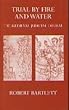
Trial by Fire and Water
Mediaeval Judicial Ordeal

Published on October 16 in 1986
Amazon UK | Amazon France | Amazon Deutschland

The Making of Europe
Conquest, Colonization and Cultural Change
950 - 1350

Published April 1993
Amazon UK | Amazon France | Amazon Deutschland

England under the Norman and Angevin Kings
1075-1225

Published January 27 in 2000
Amazon UK | Amazon France | Amazon Deutschland

The Hanged Man
A Story of Miracle, Memory and Colonialism in the Middle Ages

Published February 2 in 2004
Amazon UK | Amazon France | Amazon Deutschland

The Natural and the Supernatural in the Middle Ages

Published March 17 in 2008
Amazon UK | Amazon France | Amazon Deutschland

Revised Editions

Gerald of Wales
A Voice of the Middle Ages

Published October 15 in 2006
Amazon UK | Amazon France | Amazon Deutschland


Search for Robert Bartlett on Amazon UK, Amazon France or Amazon Deutschland.

Thursday, 16 August 2012

The Rise and Fall of Cosmic Empires // Professor Blood

Professor Blood

Andrea Gherardi is an Italian music producer from Bruxelles. That's at least what he writes on his Facebook page. Or from Piacenza.

The Rise and Fall of Cosmic Empires

He released his first EP on May 22, 2012 via Jamendo. It's a science-fiction themed concept album (if you will) on the First Solar Wars - whatever they might be.

Above all these five tracks a pretty straight forward electronic dance tracks, the last one - Removal From Office - being a bonus track without any connection to the First Solar Wars. Beat-driven techno with the occasional and very light dubstep influence. Very nice, very listenable, almost very good.

I look forward to his next release…

The Rise and Fall of Cosmic Empires on Jamendo

Professor Blood on…
Facebook
Jamendo

Saturday, 11 August 2012

Doctor Who: Blink

Doctor Who

The Doctor is a time-travelling Time Lord from the planet Gallifrey and Doctor Who (you know, as in "Doctor... who?") is one of the longest-running television franchises in science fiction.

As a huge sci-fi fan I have, of course, heard about it but never seen an episode until maybe 2010 when I have seen a few episodes late night on France 4. The first impression was rather of some silliness but after a few episodes I got into the spirit and found an universe of intriguing ideas and gripping drama with some silly goofiness thrown in. Not every idea is great but what series can not be accused of that crime.

The first episodes I've seen (in French) must have been starring David Tennant but when I started watching in earnest I naturally began with the Ninth Doctor. But you'll always remember your first Doctor and my Doctor is and probably always will be the Tenth Doctor.

Regeneration

When Doctor Who was created in 1963, the character was meant to be an older man travelling with his grand-daughter both being humanoid aliens capable of time travel. By 1966 the need of re-casting the Doctor became apparent and in any normal show that meant either one of two possibilities. One could simply take a new actor and pretend nothing ever happened. Or one could basically do what is today called a reboot - recreate everything and pretend the previous series don't exist. In a rare case you could integrate the fact that the actor has changed by saying the character has undergone plastic surgery but this seems rare indeed.

Being an alien it was suggested that the Doctor could regenerate allowing for a new actor to take on the role with different looks and attitudes while keeping the continuity intact. This way over the years the Doctor has been played by eleven differnt actors (in the official canon) with Matt Smith playing the latest incarnation since January the First, 2010.

Blink

As I have said I'm still loyal to the Tenth Doctor who appeared in three series. While I generally prefer the first and the last of these three years the Third Series still features one of the best Doctor Who episodes, ever: Blink.

A young woman gets messages from the past and needs to sort it out in order to survive the deadliest (and probably most humane) assassins of the universe and help the Doctor.

Two things stand out in this episode. First, there are these monsters whose peculiar nature makes them more frightening than your usual I-rip-your-head-off-and-feed-on-your-blood monster of the week. Second, the Doctor is hardly seen and yet you feel his presence.

I have found a video clip on YouTube but please be aware that watching it before you've seen the episode might spoil it for you!

You can buy it on Amazon…

Monday, 6 August 2012

Steampunk Literature, Part Two

Some More Fiction

Though I'm still reading another book entirely (Vanquished Gods: Science, Religion and the Nature of Belief) and will read some other book (The Long Earth) before I get into Steampunk I still have found some more to read…

Let's begin with James Blaylock's The Digging Leviathan which is the first novel in his Narbondo series, followed by Homunculus and Lord Kelvin's Machine. Blaylock was mentored - alongside Tim Powers and the aforementioned K. W. Jeter - by Philip K. Dick.

Another novel is Infernal Devices. A Mad Victorian Fantasy by none other than Jeter himself who probably coined the word steampunk in 1987.

Not Strictly Steampunk But Close Enough

Stephen Michael Stirling's The Peshawar Lancers is not entirely what I would call steampunk but close in feeling to be interesting.

Sunday, 5 August 2012

Steampunk Literature

Lately I wondered about interesting Steampunk literature.

Steampunk?

Steampunk is a term that - paralleling the word Cyberpunk invented by Bruce Bethke - denotes work featuring a certain punk attitude in combination with a core technology. While in the case of cyberpunk it is the nowadays prevalent electronic technology, steampunk takes a bit more revisionist and romantic approach by making the steam engine the primary driving force behind most technical development.

This makes for visually striking imagery but appears to us today less plausible. This (and the appealing idea that common people can with some training repair everything) helps in popularizing the basic ideas of the steampunk concept. But it also seems to be a reason that steampunk has until late largely refined to visual art forms like movies (my favorite one featuring steampunk concepts so far as I have seen remains La Cité des enfants perdus), animes and comics.

So what about written fiction?

I have decided to create a small list of Steampunk literature that I will try to get and read it and I will eventually post reviews on each book thus processed on this blog.

One book that I actually do own myself is The Difference Engine by William Gibson and Bruce Sterling. One early example of steampunk writing is Michael Moorcock's A Nomad of the Time Streams trilogy published between 1971 and 1981.

More recent additions to the genre is the work of Stephen Hunt's Jackelian fantasy series. Another novel that was placed in the steampunk tradition by none other than Moorcock himself is The Manual of Detection by Jedediah Berry.

The difficulty seems also to be that due to its nature (and close relation to the Victorian era) steampunk is frequently mixed with gothic horror, supernatural romance and/or written as young adults literature neither of which is necessarily bad but also dilutes the idea of steampunk (that I like).

The Difference Engine
The Warlord of the Air
The Land Leviathan
A Nomad Of Time Streams
The Court of the Air
The Manual of Detection
Writing Steampunk

Amazon.co.uk Widgets