Friday, 14 February 2014

Wednesday, 1 January 2014
Vangelis Papathanassiou's La fête sauvage - a Proposition
Ευάγγελος Οδυσσέας Παπαθανασίου - better known as Vangelis - has composed a lot of music but kinda cared little to let people hear it. A lot of his music is still unreleased or only available in bootlegged or incidental formats. Most part of his Blade Runner soundtrack can only be heard on the various bootlegs while some other scores can only be heard in the background of the scored work.
And there is the fact that some music has never been properly cued in optical disc authoring. Heaven and Hell has easily recognizable parts, and some have been featured as such on compilation albums, but the album itself is only ever split into two tracks (and occasionally three) instead of the 9 that would be necessary.
Now there will be those (including to all likelihood Vangelis himself) saying that this is the way the music was intended to be listened to. But I personally find that in the time and age of music that plays on computers with dynamic and random playlists I often prefer a short piece of music instead of the whole 15 to 20 minutes of a vinyl side. One can still listen to the whole album if your in the mood…
Anyway, I though it might be a good thing to propose a way to split the albums into its parts. I use to whole disc image (as a single Wave file) with a cuesheet and have then altered the cuesheet. La fête sauvage is the first that I will treat this way.

La fête sauvage is the score to a French wildlife documentary by Frédéric Rossif. The album was originally published in 1976 and has since seen numerous reissues on CD, either with a single tracks or split into two tracks representing both sides of the original vinyl.
Here is my proposed cuesheet of the album, based on the 1995 issue by Polydor:
REM COMMENT "proposed split"
CATALOG 0042284119825
PERFORMER "Vangelis"
TITLE "La Fête sauvage"
FILE "Vangelis - La Fête sauvage.wav" WAVE
TRACK 01 AUDIO
TITLE "La Fête sauvage I: 1st Movement"
PERFORMER "Vangelis"
INDEX 00 00:00:00
INDEX 01 00:00:33
TRACK 02 AUDIO
TITLE "La Fête sauvage I: 2nd Movement"
PERFORMER "Vangelis"
INDEX 01 02:28:25
TRACK 03 AUDIO
TITLE "La Fête sauvage I: 3rd Movement"
PERFORMER "Vangelis"
INDEX 01 08:42:48
TRACK 04 AUDIO
TITLE "La Fête sauvage I: 4th Movement"
PERFORMER "Vangelis"
INDEX 01 11:52:47
TRACK 05 AUDIO
TITLE "La Fête sauvage I: 5th Movement"
PERFORMER "Vangelis"
INDEX 01 15:24:18
TRACK 06 AUDIO
TITLE "La Fête sauvage II: 1st Movement"
PERFORMER "Vangelis"
INDEX 01 18:13:24
TRACK 07 AUDIO
TITLE "La Fête sauvage II: 2nd Movement"
PERFORMER "Vangelis"
INDEX 01 20:29:67
TRACK 08 AUDIO
TITLE "La Fête sauvage II: 3rd Movement"
PERFORMER "Vangelis"
INDEX 01 24:41:01
TRACK 09 AUDIO
TITLE "La Fête sauvage II: 4th Movement"
PERFORMER "Vangelis"
INDEX 01 26:48:71
TRACK 10 AUDIO
TITLE "La Fête sauvage II: 5th Movement"
PERFORMER "Vangelis"
INDEX 01 31:21:18
TRACK 11 AUDIO
TITLE "La Fête sauvage II: 6th Movement"
PERFORMER "Vangelis"
INDEX 01 33:01:47
TRACK 12 AUDIO
TITLE "La Fête sauvage II: 7th Movement"
PERFORMER "Vangelis"
INDEX 01 34:38:33
I hope that you will find it useful or at least interesting. I retained the original two parts as a starting point.
In case you want to buy the album you may find it on Amazon.fr , Amazon.de
 or Amazon.co.uk
 . And for whatever reason you want another alternative - try MusicStack.
And there is the fact that some music has never been properly cued in optical disc authoring. Heaven and Hell has easily recognizable parts, and some have been featured as such on compilation albums, but the album itself is only ever split into two tracks (and occasionally three) instead of the 9 that would be necessary.
Now there will be those (including to all likelihood Vangelis himself) saying that this is the way the music was intended to be listened to. But I personally find that in the time and age of music that plays on computers with dynamic and random playlists I often prefer a short piece of music instead of the whole 15 to 20 minutes of a vinyl side. One can still listen to the whole album if your in the mood…
Anyway, I though it might be a good thing to propose a way to split the albums into its parts. I use to whole disc image (as a single Wave file) with a cuesheet and have then altered the cuesheet. La fête sauvage is the first that I will treat this way.

La fête sauvage is the score to a French wildlife documentary by Frédéric Rossif. The album was originally published in 1976 and has since seen numerous reissues on CD, either with a single tracks or split into two tracks representing both sides of the original vinyl.
Here is my proposed cuesheet of the album, based on the 1995 issue by Polydor:
REM COMMENT "proposed split"
CATALOG 0042284119825
PERFORMER "Vangelis"
TITLE "La Fête sauvage"
FILE "Vangelis - La Fête sauvage.wav" WAVE
TRACK 01 AUDIO
TITLE "La Fête sauvage I: 1st Movement"
PERFORMER "Vangelis"
INDEX 00 00:00:00
INDEX 01 00:00:33
TRACK 02 AUDIO
TITLE "La Fête sauvage I: 2nd Movement"
PERFORMER "Vangelis"
INDEX 01 02:28:25
TRACK 03 AUDIO
TITLE "La Fête sauvage I: 3rd Movement"
PERFORMER "Vangelis"
INDEX 01 08:42:48
TRACK 04 AUDIO
TITLE "La Fête sauvage I: 4th Movement"
PERFORMER "Vangelis"
INDEX 01 11:52:47
TRACK 05 AUDIO
TITLE "La Fête sauvage I: 5th Movement"
PERFORMER "Vangelis"
INDEX 01 15:24:18
TRACK 06 AUDIO
TITLE "La Fête sauvage II: 1st Movement"
PERFORMER "Vangelis"
INDEX 01 18:13:24
TRACK 07 AUDIO
TITLE "La Fête sauvage II: 2nd Movement"
PERFORMER "Vangelis"
INDEX 01 20:29:67
TRACK 08 AUDIO
TITLE "La Fête sauvage II: 3rd Movement"
PERFORMER "Vangelis"
INDEX 01 24:41:01
TRACK 09 AUDIO
TITLE "La Fête sauvage II: 4th Movement"
PERFORMER "Vangelis"
INDEX 01 26:48:71
TRACK 10 AUDIO
TITLE "La Fête sauvage II: 5th Movement"
PERFORMER "Vangelis"
INDEX 01 31:21:18
TRACK 11 AUDIO
TITLE "La Fête sauvage II: 6th Movement"
PERFORMER "Vangelis"
INDEX 01 33:01:47
TRACK 12 AUDIO
TITLE "La Fête sauvage II: 7th Movement"
PERFORMER "Vangelis"
INDEX 01 34:38:33
I hope that you will find it useful or at least interesting. I retained the original two parts as a starting point.
In case you want to buy the album you may find it on Amazon.fr
, Amazon.de or Amazon.co.uk. And for whatever reason you want another alternative - try MusicStack.
Wednesday, 12 June 2013
Musical Taste // Favorites
Today's post may be of little interest to you… it's some ego cajolement about my musical taste.


Above are two tag clouds displaying the covers of my most listened albums[1]. The first one (above or left) has been taken over the past six and half years, the second one represents the top of the past six months.
Special mention of Project Pitchfork.
And the artist tag cloud of my all-time favorites:

[1] My Last.fm data analyzed using Last.fm Tools.
Above are two tag clouds displaying the covers of my most listened albums[1]. The first one (above or left) has been taken over the past six and half years, the second one represents the top of the past six months.
Top 40 Artists
The following list is the current top 40 list of my favorite artists for the past twelve months…- Front Line Assembly
- Depeche Mode
- The Prodigy
- Spetsnaz
- Leæther Strip
- Stellardrone
- And One
- X-102
- Celestial Aeon Project
- Front 242
- David Arnold & Michael Price
- Vangelis
- Patenbrigade: Wolff
- Haujobb
- Rotersand
- Pendulum
- Assemblage 23
- Frank Klepacki
- Solar Fields
- Hyperwind
- Architect
- Funker Vogt
- Janne Hanhisuanto
- Bass Tandem
- The Chemical Brothers
- Absurd Minds
- Esther Garcia
- Aes Dana
- 8kHz Mono
- Patrick Gowers
- Spacetime Continuum
- Richard Wells
- klakast
- Harry Gregson-Williams
- Laibach
- Pet Shop Boys
- Mr. Oizo
- Covenant
- Klinik
- VNV Nation
Special mention of Project Pitchfork.
And the artist tag cloud of my all-time favorites:
[1] My Last.fm data analyzed using Last.fm Tools.
Tuesday, 11 June 2013
Greg Craven // How the World Ends
I admit I haven't been very active lately on Think Tank but occasionally you come across something that really adds to some public discussion.
The strong point is not its scientific accuracy, for it has none, but its simple yet powerful reasoning…
Give it look!
The strong point is not its scientific accuracy, for it has none, but its simple yet powerful reasoning…
Give it look!
Friday, 15 February 2013
I Space // Janne Hanhisuanto
Finnish composer of ambient and modern classical music Janne Hanhisuanto has released at least eight albums over the past five years.

In 2011 Lithuanian label Cold Tear Records has released his album of space music and modern classical I Space.
You may download a Creative Commons version from the Internet Archive.
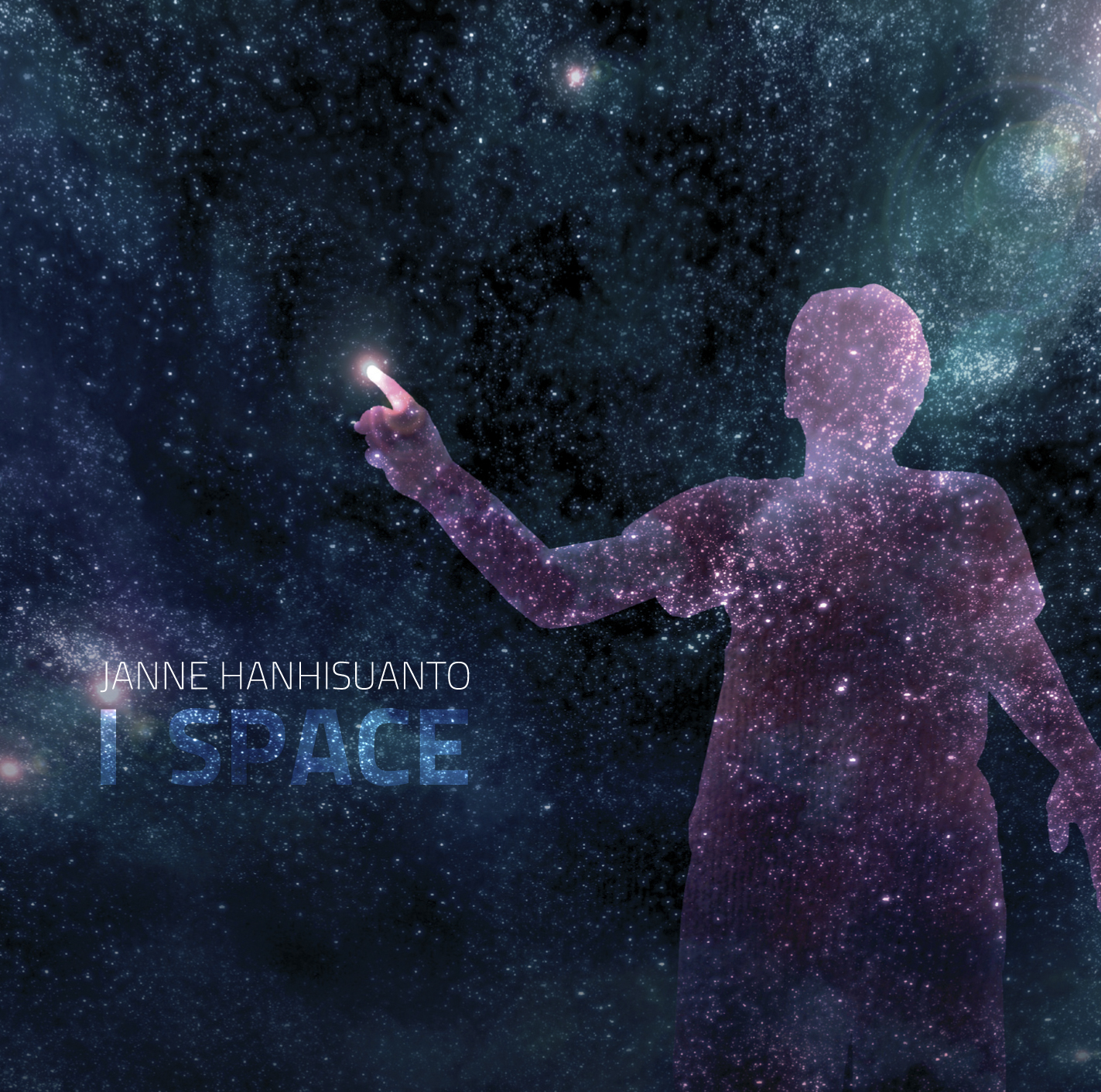
In 2011 Lithuanian label Cold Tear Records has released his album of space music and modern classical I Space.
You may download a Creative Commons version from the Internet Archive.
Friday, 11 January 2013
Roots // Tenonaki
Tech Trance
Tenonaki is not exactly a newcomer to the music industry. The album
Roots joins eight tracks produced between 1998 and 2006 by Marco Köller. Köller has been active since 1996, making techno and trance music under various labels including New Age Hippies, Blanche and Smooth. This album is his way of paying tribute to the early techno music, dating back to 1988/89 when he started deejaying.

The music filed under tech trance on the release page at Ektoplazm. I am unable to confirm this special style tag - to me it is electronic, trance-y, technoid, hard yet pleasing to my ears. So why should I care what it is called.
It reminds me of the X-102 classic Discover the Rings of Saturn which is high praise indeed as this album is one of my favorite albums in modern electronic music and was created by the kings of the Detroit school, Jeff Mills, Mike Banks and Robert Hood.
But when I say it reminds me I don't you to think that they sound alike. There are major differences. X-102 is Detroit house with a spacy twist, Tenonaki is Cologne techno with cold trance thrown in for good measures.
Download
It was released in three formats via Ektoplazm.MP3 Download
FLAC Download
WAV Download
Links
Cyan MusicEktoplazm
Creative Commons
If you like it, rate it here:
MusicBrainz
RateYourMusic
Discogs
Tuesday, 27 November 2012
Religion and Science
One of the major points of interest of mine is the question of the relation between rationality and irrationality, knowlegde and superstition, science and religion. Mark that in this sequence knowledge is not set in opposition to believe. Any human endeavor - including science - is built on some form of believe. Still the commonly used definition of knowledge remains justified true believe. The opposition is based on the difference between justified true and hold to be true believes, between something that can be objectively shown to be true and what has been told to be true.
Most books on the subject were more or less commissioned by religious institutions, at least those I could - so far - lay my hands on. This is mostly due to two reasons. Either someone is an atheist and has little or nothing to say about something he doesn't believe in. Or he's bending over backwards to give religion some space, the way Stephen Jay Gould did with the non-overlapping magisteria in his eponymous 1997 essay in the National History magazine.
Other books, like Victor Stengers God: The Failed Hypothesis, already have concluded any business of discussion the relationship between science and religion. Or Richard Dawkins, who in The God Delusion discusses the way people feel the need to define either without really explaining his stance in details. (To give them credit, they describe the basic concept while hinting at earlier works, so they may have detailed their views on defining science and religions in some other book.)
So what is missing is a deeper discussion of what religion and science are, what their similarities are, where the differences lie.
So I decided to borrow a few books and the easiest-accessible library to me is the Theological Library of the Strasbourg University in France. Hence the choice of books, Religion and Science, The Cambridge Companion to Science and the SCM Studyguide to Science and Religion. Let's start with the latter one…
SCM Studyguide to Science and Religion

Written by Jean Dorricott and published by SCM Press in 2005, the book, subtitled Footsteps in Space, claims to examine the "scientific interpretation of our position in the universe as we understand it today" and set in relation to religion by "explor[ing] the historical relationship between religion and science/technology since the Stone Ages." As this book is intended as a studyguide, the texts are relatively easy to understand, and from my point of view, almost simplistic. It's underlying presupposition is a religious view of the world. The supernatural is a fact. But of course, this is never explicitely stated, but every bit of the book oozes the ectoplasma of God.
In the introduction Dorricott writes that Part 1 of the book explores the scientific interpretation of the world as it appears to us. Yet each of its four chapter has some major reference to religious entities, the last one ("The Fifth Footprint - I Heard the Voice of God") being unabashedly religious. Even more, for a book that has science as one of its two major subjects, there's nowhere a description of what science (or religion, for that matter) actually is. It sure is easy to read but hardly can be considered a guide to serious study.
Part 2 is meant to describe the relationship between religion and science throughout the ages. Unfortunately by beginning in the "Stone Ages" it makes clear that it is willing to include a lot of conjecture into a relationship that hardly existed at all at that time. Later chapters are more fact-based but succumb to tabloid style and logic.
Just to give you an idea, here's an example. It's part of sub-section Spiralling DNA, on pages 179 and 180. (Actually, the division of the text within a chapter makes use of the sections and sub-sections for easier navigation but not as an indicator of separate ideas.)
"Although scientific method has been so successful, questions began to be raised. Science now had its own philosophers, notably Karl Popper, who introduced the idea of falsification, and Thomas Kuhn, who added paradigm shifts. Postmodern philosophers criticized scientific objectivity on the grounds that discoveries are not value-free. There is no true knowledge, only different ways of seeing the world (Paul Feyerabend). But scientists in general assume they are working with reality, as their findings do not vary with culture, place or time, and that relativity as a philosophy does not apply.
Our ability to fix things had never seemed more secure - but was? Increasing doubts about the efficacy of new technologies are causing great concern among scientists and non-scientists alike as Chapter 8 explains."
Did I say this book treats its subjects in a simplistic way? Oversimplifying seems to be the better word. Quite a major disappointment…
BLL01013529700
Buy at
Amazon.co.uk | Amazon.fr | Amazon.de
Subscribe to:
Posts (Atom)