Wednesday, 18 October 2023

Enable Num Lock on Windows Startup

 I may not be the only one who is exasperated by the fact that we’ll have to activate num lock on every startup simply to enter our password to login.

Now, there are several ways to have it activated on startup.

Three profoundly different ways were described by Shyam from The Windows Club. He proposes deactivating Fast Start on Windows, editing the registry and running a script on startup.

The last option is the least intrusive, so I will relay that one.

Open your preferred simple text editor, like Notepad, Emacs, or (my choice) Notepad++.

Enter the following code:

set WshShell = CreateObject("WScript.Shell")
WshShell.SendKeys "{NUMLOCK}"

Save the file on a safe place on your main drive with a meaningful name and the extension *.vsb (say NumLockOnStartup.vbs).

Open your task scheduler and create a new task. Under General, you set it to run with the highest privileges and only when the user is logged on. Under Triggers, you set it to run at startup. Under Actions, you add the action Start a Program and add the link to your script file (i.e. NumLockOnStartup.vbs with its full path).

Save the task, and you should have num lock enabled the next time to start your Windows.


Sunday, 6 November 2022

Jurassic Shark - a short review

 
Jurassic Shark film poster
A short while ago we had a visitor with whom we discovered a shared passion: B movies. When I was an adolescent, I watched anything that could be vaguely considered science fiction. With the advent of cheap cameras and editing software, anyone could make films and the distinction between A, B and C (or even Z) gets increasingly blurred, so I more or less stopped watching.

Now, our visitor suggested Jurassic Park. While not her words exactly, but she suggested that the film was made with as little talent as the makers could get away with, but not without some enthusiasm.

The same evening, after she left, we watched the film, and afterward I was faced with a serious conundrum: rating the film. On one side, the film is undeniable awful. Awful dialogue, delivered by awful actors, shot at some quarry lake and long abandoned hangar, with zero production values (unless you consider young women in bikinis as value).

Take the poster, which undoubtedly presents the most professional part of the production. There are no helicopters in the film, no explosion on a boat, no explosions to be seen (only heard), and the shark is way smaller (and way less realistic).

So, in the end, as films go, this one deserves by all standards only one point (actually zero, but most sites don't allow that, so it gets one point as a participation trophy, for the simple fact that it exists). But then I had so much fun with this inaptitude, the sincerity with which everyone was playing their parts - abetted by the fact that without the titles (both opening and end titles) the whole took only about 55 minutes, that I cannot help it but to give it two points on the Internet Movie Database.

As for the story, there is not much to tell. A drilling company inadvertently releases a shark that was frozen underground for millions of years to a lake. At the same time, a group of students and a gang of art thieves drop by and get caught up, first with the shark, then with one another.

The real surprise came later, when I found out that most people involved with the film kept working in the film industry and kept finding work.

Tuesday, 2 October 2018

reCAPTCHA Hell

What is a Completely Automated Public Turing test to tell Computers and Humans Apart?

Well, we have all come across these puzzles on the internet that you need to solve in order to access some site, some service or download. Created to protect again spam and bots, one can image a good use in principle. Well, you sense a but coming up, right?

But then you reach that site that asks you to solve a puzzle that is "easy for people" yet somehow you never manage to do so. Well that impossible solution has a name:

reCAPTCHA

While I have kinda made my peace with Google’s ubiquity as I’m writing these lines using Google Chrome and publishing this article on Blogger, here is the case where this monopoly got cumbersome. Here we have an API that simply is effectively blocking legitimate user from using the service provided by the website using said API - eventually driving them away. I all but stopped using any webpage using reCAPTCHA as I’m losing (at best) a lot of time solving or (at worst) not solving it. I wonder how many others like me started to avoid these reCAPTCHAs while looking for other, more viable service providers.

And I wish more people would start boycotting any website usings these impossible to solve tests. Even the name Turing test is a misnomer because Alan Turing imagined a test where a human can test it’s communication partner. I doubt that an machine-created test will be ever sophisticated enough so a machine could not solve it. If a machine is capable to create the test and understand the responses a machine can also solve the test. reCAPTCHA kinda proves this point by creating a test that neither man nor machine can solve.

Saturday, 5 August 2017

Most Successful Star Trek Movies

It has been a while since my last post but in anticipation of the new Star Trek show Discovery I thought a brief overview over the box office successes of the Star Trek franchise might be a fun read.

The Movies

Star Trek: The Motion Picture

Released December 7th, 1979 and directed by Robert Wise, considered by Rotten Tomatoes as the third-worst and by Metacritic as the second-worst of the series. I personally liked the movie for its actual continuation of the boldy go where no man has gone before theme and especially liked its slow pace. Well, and its Director’s Cut has been indeed an improvement.

Domestic Box Office: $82,258,456
Worldwide Box Office: $139,000,000
Inflation Adjusted Domestic Box Office: $283,480,334
Inflation Adjusted Worldwide Box Office: $479,000,000

Star Trek: The Wrath of Khan

Released June 4, 1982 and directed by Nicholas Meyer, considered by Rotten Tomatoes as the third-best and by Metacritic as the fourth-best of the series. Fun and fast-paced with a great Ricardo Montalban.

Domestic Box Office: $78,912,963
Worldwide Box Office: $95,800,000
Inflation Adjusted Domestic Box Office: $232,175,887
Inflation Adjusted Worldwide Box Office: $282,000,000

Star Trek: The Search for Spock

Released June 1, 1984 and directed by Leonard Nimoy, considered by Rotten Tomatoes as the sixth-worst and by Metacritic as the fourth-worst of the series. Any scene with the crew is among the best but anything is of little interest, Christopher Lloyd notwithstanding.

Domestic Box Office: $76,471,046
Worldwide Box Office: $87,000,000
Inflation Adjusted Domestic Box Office: $196,867,417
Inflation Adjusted Worldwide Box Office: $224,000,000

Star Trek: Voyage Home

Released November 26, 1986 and directed by Leonard Nimoy, considered both by Rotten Tomatoes and Metacritic as the sixth-best of the series. A crowd-pleaser and the first with a message.

Domestic Box Office: $109,713,132
Worldwide Box Office: $133,000,000
Inflation Adjusted Domestic Box Office: $252,717,820
Inflation Adjusted Worldwide Box Office: $306,000,000

Star Trek: The Final Frontier

Released June 9, 1989 and directed by William Shatner, considered both by Rotten Tomatoes and Metacritic as the worst of the series. While it has its share of desastrous ideas, to me it is on par with The Undiscovered Country. The Final Frontier was the better Star Trek movie while The Undiscovered Country is the better movie.

Domestic Box Office:$52,210,049
Worldwide Box Office: $70,200,000
Inflation Adjusted Domestic Box Office: $113,187,196
Inflation Adjusted Worldwide Box Office: $152,000,000

Star Trek: The Undiscovered Country

Released December 6, 1991 and directed by Nicholas Meyer, considered both by Rotten Tomatoes and Metacritic as the seventh-best/worst of the series. It has a great story, excellent effects and other production values, but it sucks in dialogue and so many small details, that it makes me cringe even thinking about it. (But I want that phaser Valeris shot in the kitchen. Imagine shooting at Deanna and only her uniform disappears!)

Domestic Box Office: $74,888,996
Worldwide Box Office: $96,900,000
Inflation Adjusted Domestic Box Office: $153,992,542
Inflation Adjusted Worldwide Box Office: $199,000,000

Star Trek: Generations

Released November 18, 1994 and directed by David Carson, considered by Rotten Tomatoes as the fourth-worst and by Metacritic as the fifth-worst of the series. It was cool to finally see the crew of the Enterprise-D on the big screen but its story was awful and would have been a mediocre filler episode on the show.

Domestic Box Office: $75,671,262
Worldwide Box Office: $120,000,000
Inflation Adjusted Domestic Box Office: $159,875,563
Inflation Adjusted Worldwide Box Office: $254,000,000

Star Trek: First Contact

Released November 22, 1996 and directed by Jonathan Frakes, considered by Rotten Tomatoes as the second-best and by Metacritic as the third-best of the series. My favorite movies in the series, with a good story, a frightening villain, great ideas abound etc. etc.

Domestic Box Office: $92,027,888
Worldwide Box Office: $150,000,000
Inflation Adjusted Domestic Box Office: $179,893,955
Inflation Adjusted Worldwide Box Office: $293,000,000

Star Trek: Insurrection

Released December 11, 1998 and directed by Jonathan Frakes, considered by Rotten Tomatoes as the fifth-worst and by Metacritic as the sixth-worst of the series. Insurrection shares the same problems with Generations, notably its mediocrity, but with a better director.

Domestic Box Office: $70,187,658
Worldwide Box Office: $117,800,000
Inflation Adjusted Domestic Box Office: $127,817,512
Inflation Adjusted Worldwide Box Office: $215,000,000

Star Trek: Nemesis

Released December 13, 2002 and directed by Stuart Baird, considered by Rotten Tomatoes as the second-worst and by Metacritic as the third-worst of the series. To me Nemesis was the nadir of the series: a movie made for money, for ego, for contractual obligations (whatever) - without any heart at all, by the numbers.

Domestic Box Office: $43,254,409
Worldwide Box Office: $67,312,826
Inflation Adjusted Domestic Box Office: $64,211,450
Inflation Adjusted Worldwide Box Office: $100,000,000

Star Trek

Released May 8, 2009 and directed by J.J. Abrams, considered both by Rotten Tomatoes and Metacritic as the best of the series. A good cast and beautiful cameo by Leonard Nimoy can not make up for a bad script and even worse direction. But its success breathed life into the franchise.

Domestic Box Office: $257,730,019
Worldwide Box Office: $385,680,446
Inflation Adjusted Domestic Box Office: $297,248,626
Inflation Adjusted Worldwide Box Office: $445,000,000

Star Trek Into Darkness

Released May 16, 2013 and directed by J.J. Abrams, considered by Rotten Tomatoes as the fourth-best and by Metacritic as the second-best of the series. A huge improvement over its predecessor, enjoyable. But I still don’t like J.J. Abrams as a director.

Domestic Box Office: $228,778,661
Worldwide Box Office: $467,381,584
Inflation Adjusted Domestic Box Office: $243,411,484
Inflation Adjusted Worldwide Box Office: $497,000,000

Star Trek Beyond

Released July 22, 2016 and directed by Justin Lin, considered both by Rotten Tomatoes and Metacritic as the fifth-best of the series. What it lacks in a good villain it more than makes up by a better director.

Domestic Box Office: $158,848,340
Worldwide Box Office: $336,398,312
Not yet inflation adjusted.

The Verdict

Looking at the box office globally and inflation adjusted you get Star Trek Into Darkness as the winner with almost half a billion dollars in today’s money, closely followed by Star Trek: The Motion Picture with only 18 million dollars less. Star Trek’s 2009 reboot comes third. The remaining list (from highest to lowest global box office results) is as follows: Star Trek Beyond, Star Trek: The Voyage Home, Star Trek: First Contact, Star Trek: The Wrath of Khan, Star Trek: Generations, Star Trek: The Search for Spock, Star Trek: Insurrection, Star Trek: The Undiscovered Country, Star Trek: The Final Frontier, and Star Trek: Nemesis. Adjusted for inflation the average worldwide box office per movie is about 291 million dollars.

Domestically the 2009 reboot (Star Trek) takes the top spot with almost 300 million of today’s dollars, followed by Star Trek: The Motion Picture and Star Trek: The Voyage Home on second and third places, respectively. The remaining list (from highest to lowest domestic box office results) is as follows: Star Trek Into Darkness, Star Trek: The Wrath of Khan, Star Trek: The Search for Spock, Star Trek: First Contact, Star Trek: Generations, Star Trek Beyond, Star Trek: The Undiscovered Country, Star Trek: Insurrection, Star Trek: The Final Frontier, and Star Trek: Nemesis. Adjusted for inflation the average domestic box office per movie is about 190 million dollars.

What is noteworthy for any analysis of Star Trek’s box office history is the fact that the early movies played mostly to an audience in North America which is most remarkable for Star Trek: The Search for Spock: only 12% of its global box office came from international markets while Star Trek Into Darkness and Star Trek Beyond took 51% and 53% of its box office from international markets.

As for its critical appreciation I turn to Rotten Tomatoes and Metacritic: both agree on Star Trek (2009) as the best movie in the series, followed by Star Trek: First Contact, Star Trek: The Wrath of Khan, Star Trek Into Darkness, Star Trek Beyond, Star Trek: The Voyage Home, Star Trek: The Undiscovered Country, Star Trek: The Search for Spock, Star Trek: Insurrection, Star Trek: Generations, Star Trek: The Motion Picture, Star Trek: Nemesis, and with Star Trek: The Final Frontier as the worst Star Trek movie ever, something both websites agree upon as well.

The Internet Movie Database is a good source for the public appreciation: IMDb’s voters agree with the critics and like Star Trek (2009) best, followed by Star Trek Into Darkness, Star Trek: The Wrath of Khan, Star Trek: First Contact, Star Trek: The Voyage Home, Star Trek: The Undiscovered Country, Star Trek Beyond, Star Trek: The Search for Spock, Star Trek: Generations, Star Trek: The Motion Picture, Star Trek: Nemesis, Star Trek: Insurrection, and with Star Trek: The Final Frontier as the least liked.

And finally here’s my personal ranking of appreciation: my favorite is Star Trek: First Contact, followed by Star Trek: The Wrath of Khan, Star Trek: The Voyage Home, Star Trek Into Darkness, Star Trek: The Motion Picture, Star Trek Beyond, Star Trek: The Search for Spock, Star Trek: Generations, Star Trek: The Final Frontier, Star Trek: Insurrection, Star Trek: The Undiscovered Country, Star Trek (2009), and Star Trek: Nemesis.

Sources:
The Internet Movie Database - TMP, WOK, SFS, TVH, TFF, TUC, GEN, FCO, INS, NEM, STR, IDA, and BEY. © 1990-2017 IMDb.com, Inc. Retrieved 5 August 2017.
The Numbers Star Trek - TMP, WOK, SFS, TVH, TFF, TUC, GEN, FCO, INS, NEM, STR, IDA, and BEY. © 1997-2017 Nash Information Services, LLC. Retrieved 5 August 2017.
Wikipedia - Star Trek film series. Text is available under the Creative Commons Attribution-ShareAlike License.. Retrieved 5 August 2017.

Saturday, 5 November 2016

Sex Education: Last Week Tonight with John Oliver (HBO)

Maybe not as news worthy as the U.S. elections or Near East wars but timeless and more useful information for anyone un-Sex.Ed-ucated (like Catholic clergy, Muslim "freedom" fighters, Methodists and so on).


Saturday, 15 February 2014

Werner Ruhner: Friedrich Wolfs Bummi


Ihr könnt das Buch u.a. auf Amazon.de kaufen.

Wednesday, 1 January 2014

Vangelis Papathanassiou's La fête sauvage - a Proposition

Ευάγγελος Οδυσσέας Παπαθανασίου - better known as Vangelis - has composed a lot of music but kinda cared little to let people hear it. A lot of his music is still unreleased or only available in bootlegged or incidental formats. Most part of his Blade Runner soundtrack can only be heard on the various bootlegs while some other scores can only be heard in the background of the scored work.

And there is the fact that some music has never been properly cued in optical disc authoring. Heaven and Hell has easily recognizable parts, and some have been featured as such on compilation albums, but the album itself is only ever split into two tracks (and occasionally three) instead of the 9 that would be necessary.

Now there will be those (including to all likelihood Vangelis himself) saying that this is the way the music was intended to be listened to. But I personally find that in the time and age of music that plays on computers with dynamic and random playlists I often prefer a short piece of music instead of the whole 15 to 20 minutes of a vinyl side. One can still listen to the whole album if your in the mood…

Anyway, I though it might be a good thing to propose a way to split the albums into its parts. I use to whole disc image (as a single Wave file) with a cuesheet and have then altered the cuesheet. La fête sauvage is the first that I will treat this way.


La fête sauvage is the score to a French wildlife documentary by Frédéric Rossif. The album was originally published in 1976 and has since seen numerous reissues on CD, either with a single tracks or split into two tracks representing both sides of the original vinyl.

Here is my proposed cuesheet of the album, based on the 1995 issue by Polydor:

REM COMMENT "proposed split"
CATALOG 0042284119825
PERFORMER "Vangelis"
TITLE "La Fête sauvage"
FILE "Vangelis - La Fête sauvage.wav" WAVE
  TRACK 01 AUDIO
    TITLE "La Fête sauvage I: 1st Movement"
    PERFORMER "Vangelis"
    INDEX 00 00:00:00
    INDEX 01 00:00:33
  TRACK 02 AUDIO
    TITLE "La Fête sauvage I: 2nd Movement"
    PERFORMER "Vangelis"
    INDEX 01 02:28:25
  TRACK 03 AUDIO
    TITLE "La Fête sauvage I: 3rd Movement"
    PERFORMER "Vangelis"
    INDEX 01 08:42:48
  TRACK 04 AUDIO
    TITLE "La Fête sauvage I: 4th Movement"
    PERFORMER "Vangelis"
    INDEX 01 11:52:47
  TRACK 05 AUDIO
    TITLE "La Fête sauvage I: 5th Movement"
    PERFORMER "Vangelis"
    INDEX 01 15:24:18
  TRACK 06 AUDIO
    TITLE "La Fête sauvage II: 1st Movement"
    PERFORMER "Vangelis"
    INDEX 01 18:13:24
  TRACK 07 AUDIO
    TITLE "La Fête sauvage II: 2nd Movement"
    PERFORMER "Vangelis"
    INDEX 01 20:29:67
  TRACK 08 AUDIO
    TITLE "La Fête sauvage II: 3rd Movement"
    PERFORMER "Vangelis"
    INDEX 01 24:41:01
  TRACK 09 AUDIO
    TITLE "La Fête sauvage II: 4th Movement"
    PERFORMER "Vangelis"
    INDEX 01 26:48:71
  TRACK 10 AUDIO
    TITLE "La Fête sauvage II: 5th Movement"
    PERFORMER "Vangelis"
    INDEX 01 31:21:18
  TRACK 11 AUDIO
    TITLE "La Fête sauvage II: 6th Movement"
    PERFORMER "Vangelis"
    INDEX 01 33:01:47
  TRACK 12 AUDIO
    TITLE "La Fête sauvage II: 7th Movement"
    PERFORMER "Vangelis"
    INDEX 01 34:38:33


I hope that you will find it useful or at least interesting. I retained the original two parts as a starting point.

In case you want to buy the album you may find it on Amazon.fr, Amazon.de or Amazon.co.uk. And for whatever reason you want another alternative - try MusicStack.

Wednesday, 12 June 2013

Musical Taste // Favorites

Today's post may be of little interest to you… it's some ego cajolement about my musical taste.


Above are two tag clouds displaying the covers of my most listened albums[1]. The first one (above or left) has been taken over the past six and half years, the second one represents the top of the past six months.

Top 40 Artists

The following list is the current top 40 list of my favorite artists for the past twelve months…

  1. Front Line Assembly
  2. Depeche Mode
  3. The Prodigy
  4. Spetsnaz
  5. Leæther Strip
  6. Stellardrone
  7. And One
  8. X-102
  9. Celestial Aeon Project
  10. Front 242
  11. David Arnold & Michael Price
  12. Vangelis
  13. Patenbrigade: Wolff
  14. Haujobb
  15. Rotersand
  16. Pendulum
  17. Assemblage 23
  18. Frank Klepacki
  19. Solar Fields
  20. Hyperwind
  21. Architect
  22. Funker Vogt
  23. Janne Hanhisuanto
  24. Bass Tandem
  25. The Chemical Brothers
  26. Absurd Minds
  27. Esther Garcia
  28. Aes Dana
  29. 8kHz Mono
  30. Patrick Gowers
  31. Spacetime Continuum
  32. Richard Wells
  33. klakast
  34. Harry Gregson-Williams
  35. Laibach
  36. Pet Shop Boys
  37. Mr. Oizo
  38. Covenant
  39. Klinik
  40. VNV Nation

Special mention of Project Pitchfork.

And the artist tag cloud of my all-time favorites:


[1] My Last.fm data analyzed using Last.fm Tools.

Tuesday, 11 June 2013

Greg Craven // How the World Ends

I admit I haven't been very active lately on Think Tank but occasionally you come across something that really adds to some public discussion.


The strong point is not its scientific accuracy, for it has none, but its simple yet powerful reasoning…

Give it look!

Friday, 15 February 2013

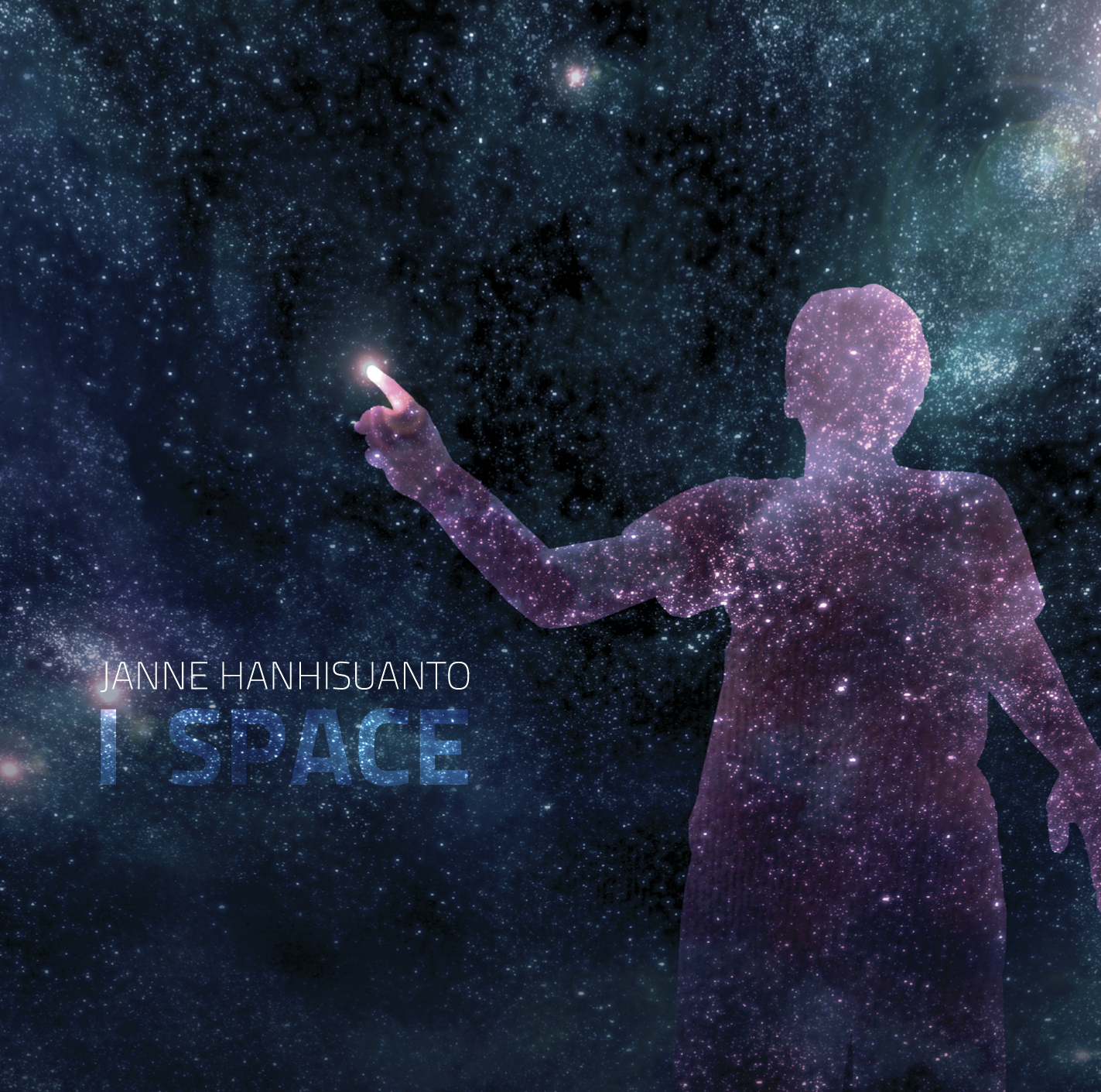
I Space // Janne Hanhisuanto

Finnish composer of ambient and modern classical music Janne Hanhisuanto has released at least eight albums over the past five years.


In 2011 Lithuanian label Cold Tear Records has released his album of space music and modern classical I Space.


You may download a Creative Commons version from the Internet Archive.

Friday, 11 January 2013

Roots // Tenonaki

Tech Trance

Tenonaki is not exactly a newcomer to the music industry. The album Roots joins eight tracks produced between 1998 and 2006 by Marco Köller. Köller has been active since 1996, making techno and trance music under various labels including New Age Hippies, Blanche and Smooth. This album is his way of paying tribute to the early techno music, dating back to 1988/89 when he started deejaying.

The music filed under tech trance on the release page at Ektoplazm. I am unable to confirm this special style tag - to me it is electronic, trance-y, technoid, hard yet pleasing to my ears. So why should I care what it is called.

It reminds me of the X-102 classic Discover the Rings of Saturn which is high praise indeed as this album is one of my favorite albums in modern electronic music and was created by the kings of the Detroit school, Jeff Mills, Mike Banks and Robert Hood.

But when I say it reminds me I don't you to think that they sound alike. There are major differences. X-102 is Detroit house with a spacy twist, Tenonaki is Cologne techno with cold trance thrown in for good measures. 

Download

It was released in three formats via Ektoplazm.

MP3 Download
FLAC Download
WAV Download


Links

Cyan Music
Ektoplazm
Creative Commons

If you like it, rate it here:
MusicBrainz
RateYourMusic
Discogs

Tuesday, 27 November 2012

Religion and Science

One of the major points of interest of mine is the question of the relation between rationality and irrationality, knowlegde and superstition, science and religion. Mark that in this sequence knowledge is not set in opposition to believe. Any human endeavor - including science - is built on some form of believe. Still the commonly used definition of knowledge remains justified true believe. The opposition is based on the difference between justified true and hold to be true believes, between something that can be objectively shown to be true and what has been told to be true.

Most books on the subject were more or less commissioned by religious institutions, at least those I could - so far - lay my hands on. This is mostly due to two reasons. Either someone is an atheist and has little or nothing to say about something he doesn't believe in. Or he's bending over backwards to give religion some space, the way Stephen Jay Gould did with the non-overlapping magisteria in his eponymous 1997 essay in the National History magazine.

Other books, like Victor Stengers God: The Failed Hypothesis, already have concluded any business of discussion the relationship between science and religion. Or Richard Dawkins, who in The God Delusion discusses the way people feel the need to define either without really explaining his stance in details. (To give them credit, they describe the basic concept while hinting at earlier works, so they may have detailed their views on defining science and religions in some other book.)

So what is missing is a deeper discussion of what religion and science are, what their similarities are, where the differences lie.

So I decided to borrow a few books and the easiest-accessible library to me is the Theological Library of the Strasbourg University in France. Hence the choice of books, Religion and Science, The Cambridge Companion to Science and the SCM Studyguide to Science and Religion. Let's start with the latter one…

SCM Studyguide to Science and Religion

Written by Jean Dorricott and published by SCM Press in 2005, the book, subtitled Footsteps in Space, claims to examine the "scientific interpretation of our position in the universe as we understand it today" and set in relation to religion by "explor[ing] the historical relationship between religion and science/technology since the Stone Ages." As this book is intended as a studyguide, the texts are relatively easy to understand, and from my point of view, almost simplistic. It's underlying presupposition is a religious view of the world. The supernatural is a fact. But of course, this is never explicitely stated, but every bit of the book oozes the ectoplasma of God.

In the introduction Dorricott writes that Part 1 of the book explores the scientific interpretation of the world as it appears to us. Yet each of its four chapter has some major reference to religious entities, the last one ("The Fifth Footprint - I Heard the Voice of God") being unabashedly religious. Even more, for a book that has science as one of its two major subjects, there's nowhere a description of what science (or religion, for that matter) actually is. It sure is easy to read but hardly can be considered a guide to serious study.

Part 2 is meant to describe the relationship between religion and science throughout the ages. Unfortunately by beginning in the "Stone Ages" it makes clear that it is willing to include a lot of conjecture into a relationship that hardly existed at all at that time. Later chapters are more fact-based but succumb to tabloid style and logic.

Just to give you an idea, here's an example. It's part of sub-section Spiralling DNA, on pages 179 and 180. (Actually, the division of the text within a chapter makes use of the sections and sub-sections for easier navigation but not as an indicator of separate ideas.)

"Although scientific method has been so successful, questions began to be raised. Science now had its own philosophers, notably Karl Popper, who introduced the idea of falsification, and Thomas Kuhn, who added paradigm shifts. Postmodern philosophers criticized scientific objectivity on the grounds that discoveries are not value-free. There is no true knowledge, only different ways of seeing the world (Paul Feyerabend). But scientists in general assume they are working with reality, as their findings do not vary with culture, place or time, and that relativity as a philosophy does not apply.

Our ability to fix things had never seemed more secure - but was? Increasing doubts about the efficacy of new technologies are causing great concern among scientists and non-scientists alike as Chapter 8 explains."

Did I say this book treats its subjects in a simplistic way? Oversimplifying seems to be the better word. Quite a major disappointment…

BLL01013529700

Buy at
Amazon.co.uk | Amazon.fr | Amazon.de

Monday, 15 October 2012

Archives // Deto & Gleam

Progressive Minimal Techno

That's what you could call the music of Hungarian duo Deto & Gleam (aka Peter Takács and Mark Bókay) on their first full album Archives - released early December 2010 by German label Digital Diamonds.

 It was released in three formats via Ektoplazm.

MP3 Download
FLAC Download
WAV Download

01 Chrono
02 511 keV (Album Load)
03 Chrono (Wasted Time Mix)
04 T-Echoes
05 Surgery
06 Tangenter
07 Tears Deconstructed
08 Observation Center

Links

Digital Diamonds
Ektoplazm
Creative Commons
MySpace

Wednesday, 10 October 2012

Checksum

Hello,

for quite some time I have been silent about computing affairs but now that I'm trying to prepare my switch to any Linux distribution there will be a few articles coming up…

But right now a simple tool you might need and for now only for Windows.

If you download open source packages — whether it's the code or some binaries — a good idea is to check the checksum hash.

Most websites use either the MD5 or SHA-1 algorithms, or both.

A fast way to hash your download and check it against the provided checksum without the full installation process is to use some protable checksum hash application.

I found DP Hash to be perfectly sufficient. It's freeware by Dirk Pähl. Nothing fancy, just some simple interface. It allows hashing of only one file at the time and can not export its results except copying the hash to the clipboard.

To check a download it's largely enough…

Website

Saturday, 29 September 2012

Inside the Medieval Mind

Robert John Bartlett is a medievalist currently holding the position of Wardlaw Professor of Mediaeval History at the University of St Andrews' School of History.

Born on November 27 in 1950, he is a Fellow of the Royal Historical Society, Fellow of the British Academy, Fellow of the Royal Society of Edinburgh and a Fellow of the Society of Antiquaries of London, specializing in medieval colonialism, the cult of saints, and England between the 11th century and the 14th century.

In 2008 he wrote and hosted a four-part television mini-series for The Open University broadcast by the BBC Four between April 17 and May 8.

Knowledge

In the first part Robert Bartlett investigates the world view as seen by the educated people of the Middle Ages between the 9th and 16th century, and the challenges brought upon them by the discovery of the world.

Sex

In the second part Robert gives us insights into how people of its time viewed love and marriage and experienced sexuality.

Belief

The Middle Ages (in Europe) are always depicted as dominated by the Christian religion. But what were the actual believes of the people?

Power

One of the major characteristics of this period was the strict social order set up by what is often called the feudal society. Robert Bartlett shows us his insights into the way the political and other order was maintained throughout the centuries and how it was transformed at the end of the Middle Ages.

Conclusion

Inside the Medieval Mind is one of the best introductions into the world of thought of an often misunderstood period - mistunderstood because it is so foreign to our own way of thinking at the beginning of the 21st century, more than half a millennium after the Middles Ages gave way to the Modern era.

Using real-life examples from ancient accounts, Robert Bartlett illustrates the medieval everyday world and contrasts it with the development of the best of the brightest at its time.

The best minds in theology and philosophy speak out, as do historians and commoners.

In almost four hours Bartlett displays the ways the average person feels about things and the best minds of its time reasoned about ideas. He never judges but tries to help us understand the basic frame of mind.

Links

BBC Four - Inside the Medieval Mind
OU on the BBC: Inside The Medieval Mind - OpenLearn - Open University
Inside the Medieval Mind (2008) - IMDb
Inside the Medieval Mind - DocuWiki

Professor Robert Bartlett, University of St Andrews - School of History Staff Profile
Robert Bartlett - Wikipedia

Bibliography

Gerald of Wales
1146-1223

Published on June 10 in 1982
Amazon UK | Amazon France | Amazon Deutschland

Trial by Fire and Water
Mediaeval Judicial Ordeal

Published on October 16 in 1986
Amazon UK | Amazon France | Amazon Deutschland

The Making of Europe
Conquest, Colonization and Cultural Change
950 - 1350

Published April 1993
Amazon UK | Amazon France | Amazon Deutschland

England under the Norman and Angevin Kings
1075-1225

Published January 27 in 2000
Amazon UK | Amazon France | Amazon Deutschland

The Hanged Man
A Story of Miracle, Memory and Colonialism in the Middle Ages

Published February 2 in 2004
Amazon UK | Amazon France | Amazon Deutschland

The Natural and the Supernatural in the Middle Ages

Published March 17 in 2008
Amazon UK | Amazon France | Amazon Deutschland

Revised Editions

Gerald of Wales
A Voice of the Middle Ages

Published October 15 in 2006
Amazon UK | Amazon France | Amazon Deutschland


Search for Robert Bartlett on Amazon UK, Amazon France or Amazon Deutschland.

Thursday, 16 August 2012

The Rise and Fall of Cosmic Empires // Professor Blood

Professor Blood

Andrea Gherardi is an Italian music producer from Bruxelles. That's at least what he writes on his Facebook page. Or from Piacenza.

The Rise and Fall of Cosmic Empires

He released his first EP on May 22, 2012 via Jamendo. It's a science-fiction themed concept album (if you will) on the First Solar Wars - whatever they might be.

Above all these five tracks a pretty straight forward electronic dance tracks, the last one - Removal From Office - being a bonus track without any connection to the First Solar Wars. Beat-driven techno with the occasional and very light dubstep influence. Very nice, very listenable, almost very good.

I look forward to his next release…

The Rise and Fall of Cosmic Empires on Jamendo

Professor Blood on…
Facebook
Jamendo

Saturday, 11 August 2012

Doctor Who: Blink

Doctor Who

The Doctor is a time-travelling Time Lord from the planet Gallifrey and Doctor Who (you know, as in "Doctor... who?") is one of the longest-running television franchises in science fiction.

As a huge sci-fi fan I have, of course, heard about it but never seen an episode until maybe 2010 when I have seen a few episodes late night on France 4. The first impression was rather of some silliness but after a few episodes I got into the spirit and found an universe of intriguing ideas and gripping drama with some silly goofiness thrown in. Not every idea is great but what series can not be accused of that crime.

The first episodes I've seen (in French) must have been starring David Tennant but when I started watching in earnest I naturally began with the Ninth Doctor. But you'll always remember your first Doctor and my Doctor is and probably always will be the Tenth Doctor.

Regeneration

When Doctor Who was created in 1963, the character was meant to be an older man travelling with his grand-daughter both being humanoid aliens capable of time travel. By 1966 the need of re-casting the Doctor became apparent and in any normal show that meant either one of two possibilities. One could simply take a new actor and pretend nothing ever happened. Or one could basically do what is today called a reboot - recreate everything and pretend the previous series don't exist. In a rare case you could integrate the fact that the actor has changed by saying the character has undergone plastic surgery but this seems rare indeed.

Being an alien it was suggested that the Doctor could regenerate allowing for a new actor to take on the role with different looks and attitudes while keeping the continuity intact. This way over the years the Doctor has been played by eleven differnt actors (in the official canon) with Matt Smith playing the latest incarnation since January the First, 2010.

Blink

As I have said I'm still loyal to the Tenth Doctor who appeared in three series. While I generally prefer the first and the last of these three years the Third Series still features one of the best Doctor Who episodes, ever: Blink.

A young woman gets messages from the past and needs to sort it out in order to survive the deadliest (and probably most humane) assassins of the universe and help the Doctor.

Two things stand out in this episode. First, there are these monsters whose peculiar nature makes them more frightening than your usual I-rip-your-head-off-and-feed-on-your-blood monster of the week. Second, the Doctor is hardly seen and yet you feel his presence.

I have found a video clip on YouTube but please be aware that watching it before you've seen the episode might spoil it for you!

You can buy it on Amazon…

Monday, 6 August 2012

Steampunk Literature, Part Two

Some More Fiction

Though I'm still reading another book entirely (Vanquished Gods: Science, Religion and the Nature of Belief) and will read some other book (The Long Earth) before I get into Steampunk I still have found some more to read…

Let's begin with James Blaylock's The Digging Leviathan which is the first novel in his Narbondo series, followed by Homunculus and Lord Kelvin's Machine. Blaylock was mentored - alongside Tim Powers and the aforementioned K. W. Jeter - by Philip K. Dick.

Another novel is Infernal Devices. A Mad Victorian Fantasy by none other than Jeter himself who probably coined the word steampunk in 1987.

Not Strictly Steampunk But Close Enough

Stephen Michael Stirling's The Peshawar Lancers is not entirely what I would call steampunk but close in feeling to be interesting.

Sunday, 5 August 2012

Steampunk Literature

Lately I wondered about interesting Steampunk literature.

Steampunk?

Steampunk is a term that - paralleling the word Cyberpunk invented by Bruce Bethke - denotes work featuring a certain punk attitude in combination with a core technology. While in the case of cyberpunk it is the nowadays prevalent electronic technology, steampunk takes a bit more revisionist and romantic approach by making the steam engine the primary driving force behind most technical development.

This makes for visually striking imagery but appears to us today less plausible. This (and the appealing idea that common people can with some training repair everything) helps in popularizing the basic ideas of the steampunk concept. But it also seems to be a reason that steampunk has until late largely refined to visual art forms like movies (my favorite one featuring steampunk concepts so far as I have seen remains La Cité des enfants perdus), animes and comics.

So what about written fiction?

I have decided to create a small list of Steampunk literature that I will try to get and read it and I will eventually post reviews on each book thus processed on this blog.

One book that I actually do own myself is The Difference Engine by William Gibson and Bruce Sterling. One early example of steampunk writing is Michael Moorcock's A Nomad of the Time Streams trilogy published between 1971 and 1981.

More recent additions to the genre is the work of Stephen Hunt's Jackelian fantasy series. Another novel that was placed in the steampunk tradition by none other than Moorcock himself is The Manual of Detection by Jedediah Berry.

The difficulty seems also to be that due to its nature (and close relation to the Victorian era) steampunk is frequently mixed with gothic horror, supernatural romance and/or written as young adults literature neither of which is necessarily bad but also dilutes the idea of steampunk (that I like).

The Difference Engine
The Warlord of the Air
The Land Leviathan
A Nomad Of Time Streams
The Court of the Air
The Manual of Detection
Writing Steampunk

Amazon.co.uk Widgets